Security Labels for Automotive Parts Manufacturers
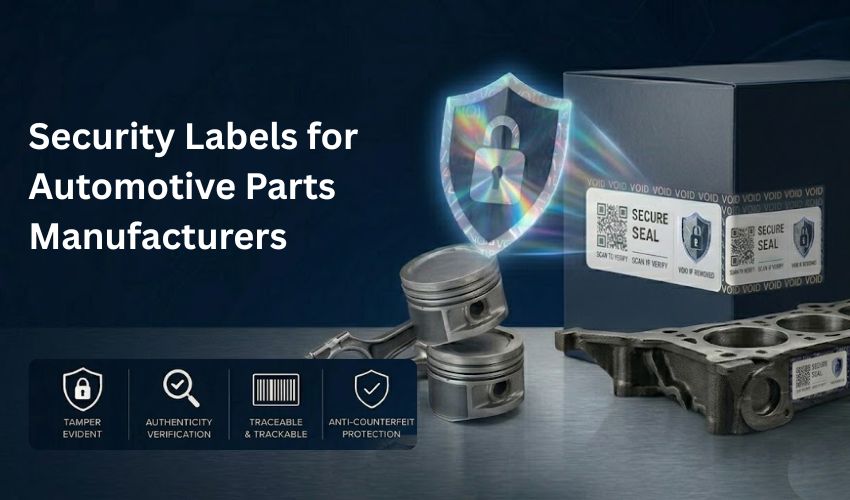
A car owner replaces a set of brake pads, an oil filter, or an airbag module, fully expecting it to perform the way the original part did. In most cases, that trust is well placed. But counterfeit automotive parts have become a serious problem in markets around the world, and the consequences of installing one are rarely minor.
For manufacturers, this is not only a safety issue. It is a brand issue, a liability issue, and increasingly a regulatory one. Security labels have become one of the most practical tools available to address all three at once, and this guide walks through what they are, how they work, and how to choose the right one.
Why Are Security Labels Essential for Automotive Parts Manufacturers?
Automotive parts move through long and often fragmented supply chains. A component might pass through a manufacturer, a distributor, a regional warehouse, an online marketplace, and a local garage before it ever reaches a vehicle. At each handoff, there is an opportunity for a counterfeit part to enter the chain disguised as the genuine article.
A security label enables manufacturers to authenticate every genuine unit using features that are extremely difficult to replicate. Once that mark exists, distributors can check incoming stock, mechanics can verify a part before fitting it, and brand protection teams can build a real case when counterfeit goods are found in the market.
There is also a commercial impact that often gets overlooked. When fake parts circulate under a genuine brand name and later fail, it is the genuine brand that takes the reputational hit, not the counterfeiter. A security label is one of the few tools that lets a manufacturer draw a clear, demonstrable line between what they made and what they did not.
What Types of Security Labels Are Used in the Automotive Industry?
No single security label can address the needs of every automotive application. That's why most manufacturers rely on a combination of solutions to achieve the right level of protection:
Holographic Labels and Hot Stamping Foils:
These remain the most common starting points because they offer an instant visual check. An authentic holographic security feature exhibits distinctive optical effects, including colour shifts and depth perception, that are extremely difficult to replicate using conventional printing technologies.
Tamper-evident substrates:
These are designed to fail visibly the moment someone tries to remove them. Some reveal a hidden VOID or TAMPERED message. Others split into two patterns, such as a checkerboard, so neither half can be reused on a different part.
Holographic Shrink Sleeves and Security Holographic Films:
For components that need full surface coverage, or for retail packaging around a spare part, a holographic film or shrink sleeve can wrap the entire surface rather than sitting as a single patch.
Track-and-Trace Labels Integrated with AIDC Technologies:
Barcodes, QR codes, RFID, and other identification technologies can be integrated into security labels so that a scan at any point in the supply chain confirms whether that specific unit is genuine and where it is supposed to be.
Covert and forensic features:
Some labels carry elements that are invisible under normal light and only appear under UV, infrared, or with a specialised reader. These are not meant for everyday checks. They exist for investigators and enforcement teams who need conclusive proof when a counterfeiting case goes to court.
How Do Security Labels Help Prevent Counterfeit Automotive Parts?
The protection comes from combining features that work at different levels, rather than relying on any single trick.
At the first level, advanced holographic security features are difficult to replicate because they are created through precision OVD origination rather than conventional printing. A counterfeiter working from a scanned or photographed image of a genuine hologram cannot reproduce its colour-shifting optical effects, because that behaviour comes from a physical structure, not a printed pattern.
Tamper-evident substrates add a second layer. Even if a counterfeiter manages to source or copy a genuine label, they cannot simply peel it off a real part and stick it onto a fake one. Any attempt to do so destroys the label or leaves a permanent, visible mark.
Serialisation and track-and-trace add a third layer that works across the supply chain rather than at a single point. Every label can carry a unique code, so if the same code shows up twice in two different locations, that is an immediate signal that something has been duplicated.
Covert and forensic features complete the layered authentication system. They give brand protection teams a way to confirm authenticity with certainty, even when a counterfeit has been made well enough to fool a casual inspection.
Key Features to Look for in Automotive Security Labels
Not every label needs every feature, but a few things are worth checking regardless of the application.
Durability for the Intended Operating Environment:
A label on a part that lives under the bonnet needs to survive heat, vibration, oil, and exposure to fuel or solvents. A label meant for a retail box does not face the same conditions, so the substrate and adhesive should be matched to where the label will actually sit.
Genuine tamper evidence, not simply a Label Claiming to be Tamper-Evident:
Look for substrates that physically fail when removed, whether that means a residue-based VOID message or a substrate that splits and cannot be reassembled.
A combination of overt, covert, and forensic authentication features:
A visible holographic feature is useful for quick checks by distributors and mechanics. A covert or forensic feature is what gives an investigation team something solid to stand on later.
Traceability that connects to your own systems:
A QR code or barcode is only useful if it links back to a database your team controls, so that a scan tells you not just that a code exists, but whether it matches a genuine unit that should be in that location.
Manufacturing Partner:
Choose a partner with end-to-end capabilities, from OVD origination and security design to label manufacturing and variable data printing.
How to Choose the Right Security Label Solution for Automotive Components?
The right starting point is the part itself, not the label. A high-value electronic sensor, a safety-critical brake component, and a retail packaged filter all carry different risks and call for different solutions.
It helps to ask a few practical questions early on. Where in the supply chain is the part most likely to be intercepted or substituted? Who needs to be able to verify it: a distributor doing a stock check, a mechanic before installation, a consumer buying online, or an investigator building a case? What environment will the label have to survive, and for how long, given that some automotive parts stay in service for years?
From there, manufacturers can work backwards to the right mix of features. A part sold mostly through controlled dealer networks may need less covert protection than one that ends up on open online marketplaces, where counterfeiters have an easier time slipping fakes in front of buyers. A part with a long service life needs adhesive and substrate choices that will still hold up years after installation.
Holoflex works with automotive manufacturers to design this kind of layered solution, combining holographic security features, tamper-evident substrates, and track and trace capability into a single label built for the specific part and the specific risk it faces.
Conclusion
Counterfeit automotive parts are not a distant or theoretical problem. They are sitting in customs warehouses by the hundreds of thousands, they are reaching consumers through online marketplaces, and in the worst cases, they are contributing to real injuries and deaths. For manufacturers, a well-designed security label is one of the most direct ways to protect the people using their products and the brand standing behind them.
Holoflex brings together advanced OVD origination, tamper-evident technologies, security printing, and track-and-trace capabilities to help automotive parts manufacturers embed protection into every label rather than treating security as an afterthought.
Connect with Holoflex to develop a customised security label solution for your automotive component. Visit here for more details: https://www.holoflex.com
FAQs
1. Why do automotive parts manufacturers need security labels?
Automotive parts pass through long, multi tier supply chains where counterfeit components can be introduced at almost any point. Security labels give manufacturers, distributors, and end users a way to verify that a part is genuine before it goes into a vehicle, protecting both consumer safety and the manufacturer's reputation.
2. What are the best security labels for automotive parts?
There is no single best option for every part. Most manufacturers combine holographic labels for instant visual checks, tamper-evident substrates to stop label reuse, and track and trace codes for supply chain visibility, choosing the mix based on the part's risk profile and operating environment.
3. How do security labels prevent counterfeit automotive components?
They work by combining features that are difficult to copy, such as laser-originated holograms, with features that prevent reuse, such as tamper-evident substrates, and features that allow verification at scale, such as unique serialised codes linked to a manufacturer database.
4. Can security labels withstand harsh automotive environments?
Yes, when they are specified correctly for the application. Labels designed for engine compartments or under-chassis use are built with adhesives and films that can handle heat, vibration, and exposure to oil or fuel, which is different from the specification needed for a label on retail packaging.
5. What industries within automotive manufacturing benefit from security labels?
Security labels are used across OEM parts manufacturing, aftermarket and replacement parts, electronic components such as sensors and control modules, safety-critical systems like brakes and airbags, and even vehicle number plates and registration documentation.
6. Are security labels mandatory for automotive spare parts?
Requirements vary by country and by part category, and not every jurisdiction mandates security labelling for all automotive components. Even where it is not legally required, many manufacturers choose to use security labels voluntarily as a practical safeguard against counterfeiting and liability exposure.
Latest Blogs

Anti-Counterfeit Labels for Packaging: How Indian FMCG Brands Prevent Product Duplication in 2026
Sep 28, 2026
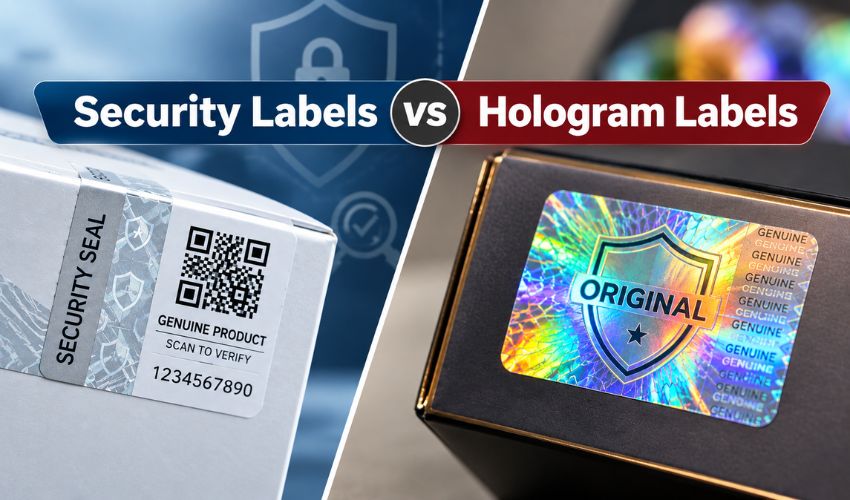
Security Labels vs Hologram Labels: Which Anti-Counterfeit Solution Is Best for Indian Manufacturers?
Sep 18, 2026
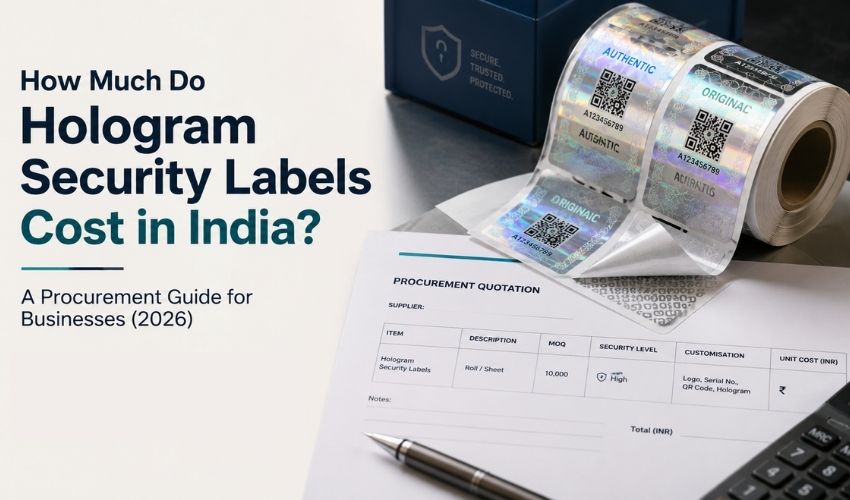
How Much Do Hologram Security Labels Cost in India? A Procurement Guide for Businesses (2026)
Aug 21, 2026
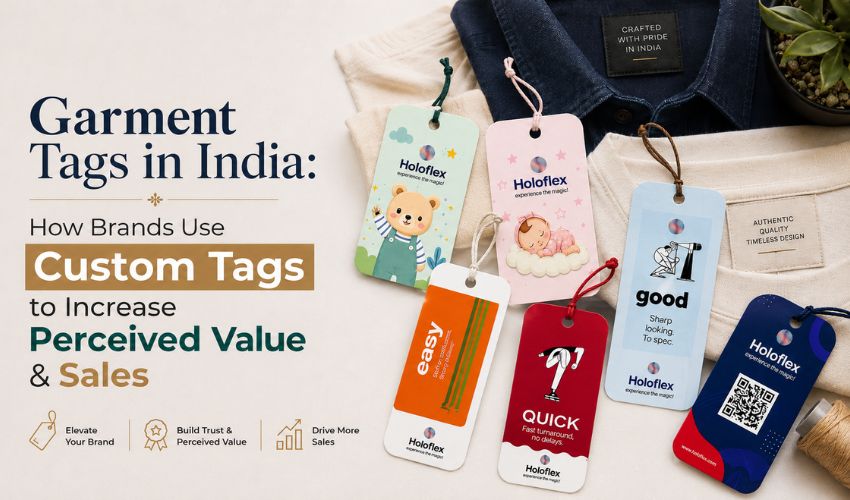
Garment Tags in India: How Brands Use Custom Tags to Increase Perceived Value & Sales
Jul 27, 2026
Custom Security Labels: How Indian Manufacturers Should Use Them for Tracking & Protection
Jul 16, 2026
Top Benefits of Shrink Sleeve Labels for Product Packaging
Jun 29, 2026
Security Labels for Automotive Parts Manufacturers
Jun 23, 2026

The Evolution of Holographic Technology: From Visual Authentication to Advanced Optical Security
Jun 10, 2026

Smart Labelling Solutions For Food & Beverage Packaging
May 25, 2026
How Secure Packaging Helps E-Commerce Brands Reduce Fraud?
May 21, 2026

How Security Holograms Prevent Counterfeit Pharmaceuticals in India
Jul 16, 2025
Top 5 Custom Hologram Applications for FMCG Packaging
Jul 24, 2025

How Security Holograms Shield FMCG Packaging from the Rising Counterfeit Menace
Aug 16, 2025
Why Self-Adhesive Labels Are the Smarter Choice for Modern Packaging
Aug 21, 2025

Revolutionizing Brand Protection: Holographic Security Packaging with Integrated Phygital Solutions
Oct 23, 2025
Protecting Your Brand with Tamper-Evident Labels in India
Oct 30, 2025
OVDs vs Traditional Holograms: What Modern Brands Should Choose in 2026
Dec 19, 2025
Eco-Friendly Label Materials: How Brands Can Reduce Packaging Waste Without Losing Security
Jan 06, 2026
The Rise of OVD-Led Authentication - Where Design and Advanced Authentication Converge
Feb 12, 2026
When Security Becomes Design in the Evolution of Garment Tags?
Feb 24, 2026
Holograms & OVDs in Security Labels and Stickers: A Smart Way to Protect Products
Mar 17, 2026
Customised Packaging Labels in India: A Complete Guide for Businesses
Mar 24, 2026
How Advanced OVD Technology is Transforming Hologram Security in 2026?
Apr 28, 2026