How QR Code Authentication and Hologram Labels Work Together to Combat Counterfeiting?
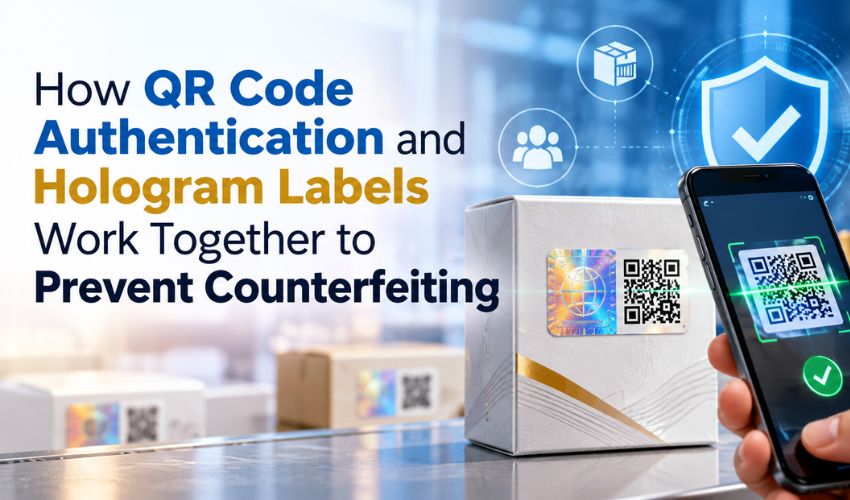
Counterfeit products are a growing concern for manufacturers, brands and consumers. From pharmaceuticals and cosmetics to electronics and industrial goods, fake products can damage brand reputation, reduce customer trust and create safety risks. As counterfeiting methods become more sophisticated, businesses need reliable ways to protect their products and verify their authenticity.
Two technologies that can support product protection are hologram labels and QR codes linked to a secure authentication system. QR codes connect physical products with digital information, while holograms provide a visible security feature that can help identify genuine products. When these technologies work together, they create an additional layer of protection against counterfeiting.
But how does this combination work, and why should manufacturers consider it? Let's explore how QR code authentication and hologram labels support product security.
What Is QR Code Product Authentication?
QR-based product authentication uses a code linked to a digital verification system, allowing users to check product information and, depending on the implementation, assess authenticity. Depending on the authentication system, the code may connect to a secure webpage or platform that displays product details and verifies whether the product is genuine.
Manufacturers can link QR codes to information such as:
- Product name and identification number
- Batch or serial number
- Manufacturing and packaging details
- Authentication status
- Product traceability information
For stronger protection, manufacturers can assign a unique QR code to each product and link it to a secure verification system with appropriate controls. This allows the authentication platform to identify individual items and flag suspicious activity, such as repeated scans.
However, a QR code alone cannot guarantee authenticity. If a code is copied onto counterfeit packaging, additional security measures are needed to detect misuse.
What Are Hologram Labels, and How Do They Combat Counterfeiting?
Security hologram labels use specialised optical features to create visual effects that change with viewing angle or lighting. These features can make labels difficult to reproduce accurately using ordinary printing methods.
Depending on the design and security level, hologram labels may include distinctive patterns, fine details, logos, microtext or other security elements.
Manufacturers use holograms for several purposes:
- Visual authentication: Customers and distributors can inspect distinctive optical features designed to support visual verification.
- Brand protection: Custom holographic designs make unauthorised reproduction more difficult.
- Tamper evidence: Hologram labels incorporating suitable tamper-evident materials or constructions can reveal signs of removal or interference.
- Product identification: Holograms can complement other identification and security features.
Not every hologram provides the same level of protection. The security depends on its construction, design complexity and the difficulty of reproducing its features.
How Do QR Code Authentication and Hologram Labels Work Together?
Combining digital verification with a physical security label helps manufacturers protect products through two complementary methods. The hologram provides a visible security feature, while the QR code connects the product to a digital authentication system.
Here is how the process typically works.
1. A Secure Label Is Created
The manufacturer selects a hologram design and incorporates a QR code into the label or places the code alongside it. Depending on the application, the label may also contain a unique serial number, batch information or other security features.
2. Each Product Receives Its Identification Details
For individual product authentication, a unique QR code can be assigned to each unit. The code is linked to a record in the manufacturer's authentication database. This helps distinguish individual products and supports traceability throughout the supply chain.
3. The Product Reaches the Market
The labelled product moves through the distribution network to retailers or end customers. The hologram provides a physical security feature that can be inspected, while the QR code offers access to digital verification.
4. The Customer Scans the QR Code
Using a smartphone camera or QR scanning application, the customer scans the code. The code directs the user to the manufacturer's official verification platform.
The verification process should direct users to the manufacturer's official platform and make it easy to distinguish from untrusted websites.
5. The Authentication System Checks the Code
Where a secure backend is implemented, the platform can check the code against the manufacturer's records and flag suspicious activity. Depending on the system, it may display the product's identity, confirm its registration or flag suspicious activity, such as an unusual number of scans.
The verification results can help customers and authorised partners assess whether the product is consistent with the manufacturer's records.
6. The Physical and Digital Features Provide Combined Protection
Customers can inspect the hologram and review the digital verification result. If the hologram appears suspicious or the QR code produces an unexpected result, the user can contact the manufacturer before relying on the product's authenticity.
When properly designed and integrated, these features can make unauthorised copying and misuse more difficult to carry out undetected.
Hologram Labels vs QR Code Authentication: Understanding the Difference?
Both technologies serve different purposes. The right choice depends on the product and its security requirements.
| Feature | Hologram Labels | QR Code Authentication |
| Main purpose | Physical security | Digital verification |
| Verification method | Visual inspection | Smartphone scanning |
| Product traceability | Limited on its own | Possible through linked records |
| Copying risk | Depends on design complexity | Codes can be copied without security controls |
| Key benefit | Visible authentication | Access to digital product information |
Which option should manufacturers choose?
Hologram labels are useful when visible security and physical inspection are important. QR code authentication is valuable when businesses need digital verification, product information and traceability.
For products with higher authentication risks, combining the two can provide a more layered approach than relying on either technology alone.
Can a Hologram Label Have a QR Code?
Yes. A hologram label can incorporate a QR code or use one alongside its holographic design. This approach combines a physical security feature with a digital verification method.
However, the QR code must remain readable by smartphone cameras. The label design should account for contrast, printing quality, size and the optical characteristics of the holographic material.
Manufacturers should also test the finished label under different lighting conditions and on the actual packaging material. A visually attractive label loses much of its digital functionality if customers cannot scan its code reliably.
For stronger protection, a unique QR code can be linked to an authentication platform, while the hologram uses a customised design that is difficult to reproduce.
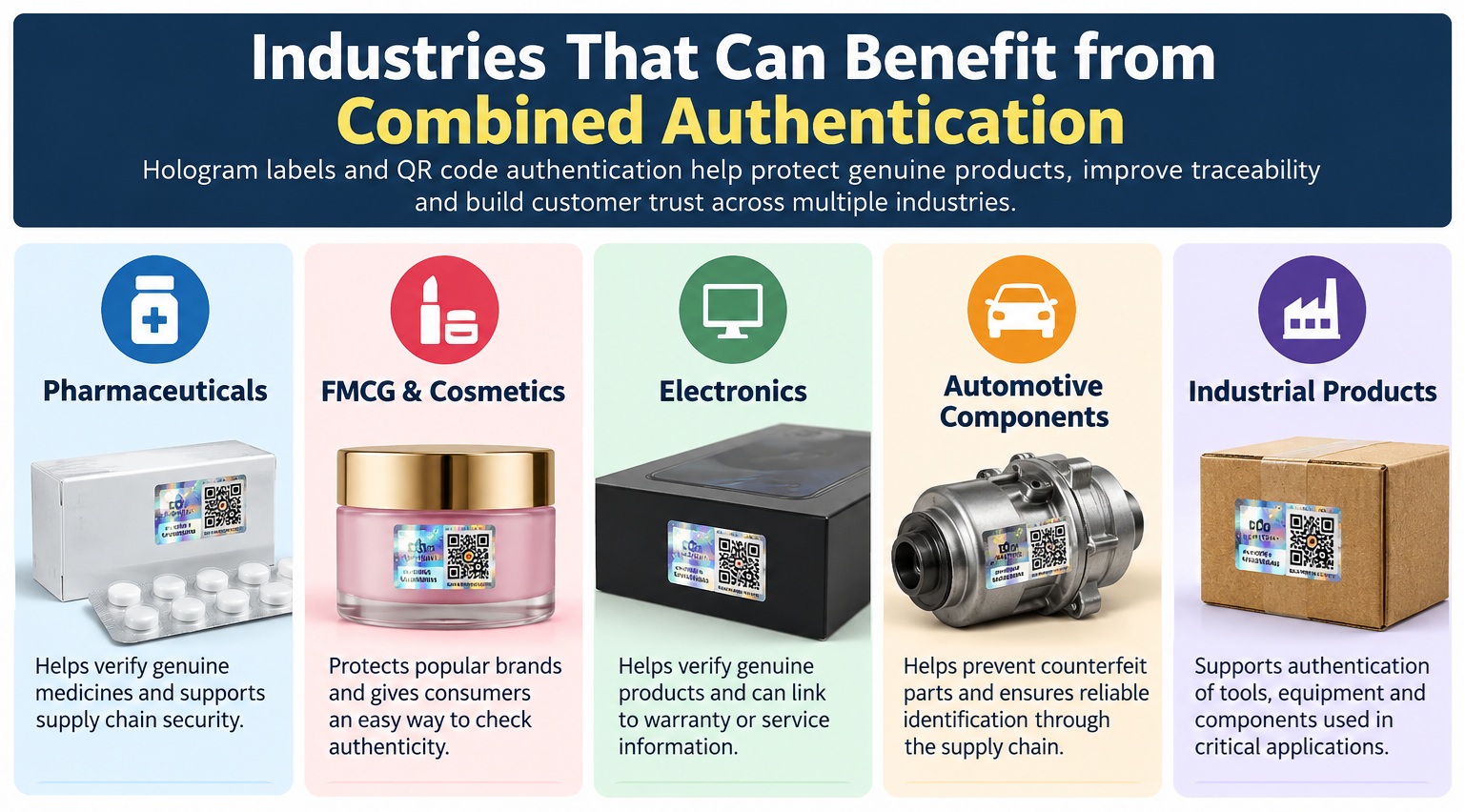
How to Choose a Secure Product Authentication System
Before implementing a combined solution, manufacturers should consider these factors:
- Unique codes: Assign individual codes when product-level verification is required.
- Secure verification: Connect codes to a controlled authentication platform.
- Copy detection: Monitor duplicate scans and suspicious activity.
- Label durability: Ensure labels remain readable during storage and transportation.
- Tamper evidence: Select suitable label materials when removal or replacement is a concern.
- Easy scanning: Make verification simple for customers and distributors.
Manufacturers should also consider integration with existing packaging, inventory and traceability systems.
Why Manufacturers Should Consider Combined Anti-Counterfeit Technology
Counterfeit prevention requires more than a single security feature. Physical labels can be copied, QR codes can be reproduced, and even a genuine code may be misused if the verification process is weak.
Combining security holograms with digital authentication helps address these limitations by connecting visible product protection with digital checks. It can support brand protection, improve product identification and give consumers another way to assess product authenticity.
Holoflex brings together security holograms, customised labelling, advanced OVD technology and AIDC solutions to address evolving product authentication and traceability requirements. With ENGRAVION™ for advanced optical effects and security, and JURA supporting sophisticated security design, Holoflex can help manufacturers explore solutions that combine visual appeal, physical security and digital identification .
The most effective solution is one designed around the product's risks, supply chain and customer needs. With appropriate label design, unique identification and secure digital verification, businesses can strengthen their approach to product authentication and brand protection.
A QR code is one component of a connected label; the broader solution may also integrate holographic security, tamper-evident construction, unique identification and other features according to the product's requirements
Frequently Asked Questions
1. What is QR code product authentication?
QR code product authentication allows customers to scan a product's QR code and check its details through a digital verification system. Depending on the implementation, the system can confirm registered product information and flag suspicious activity.
2. Can QR codes prevent counterfeit products?
QR codes can help identify counterfeit products when they are connected to a secure authentication platform. However, ordinary QR codes can be copied. Unique codes, secure verification and duplicate-scan monitoring can improve protection.
3. What is the difference between QR authentication and holograms?
QR authentication uses digital information to verify product records, while holograms provide physical optical security features. QR codes support digital checks, whereas holograms allow visual inspection. Using both can provide complementary protection.
4. Can a hologram label have a QR code?
Yes. Manufacturers can integrate a QR code into a hologram label or place it alongside the holographic feature. The design should preserve scan readability while maintaining the label's security properties.
5. How can manufacturers verify products using smartphones?
Manufacturers can provide unique QR codes linked to an official authentication platform. Customers scan the code using a smartphone, and the platform checks its record and displays a verification result. Additional controls can help identify copied codes and suspicious scanning activity.
Latest Blogs
How QR Code Authentication and Hologram Labels Work Together to Combat Counterfeiting?
Oct 17, 2026
Anti-Counterfeit Labels for Packaging: How Indian FMCG Brands Prevent Product Duplication in 2026
Sep 28, 2026
Security Labels vs Hologram Labels: Which Anti-Counterfeit Solution Is Best for Indian Manufacturers?
Sep 18, 2026
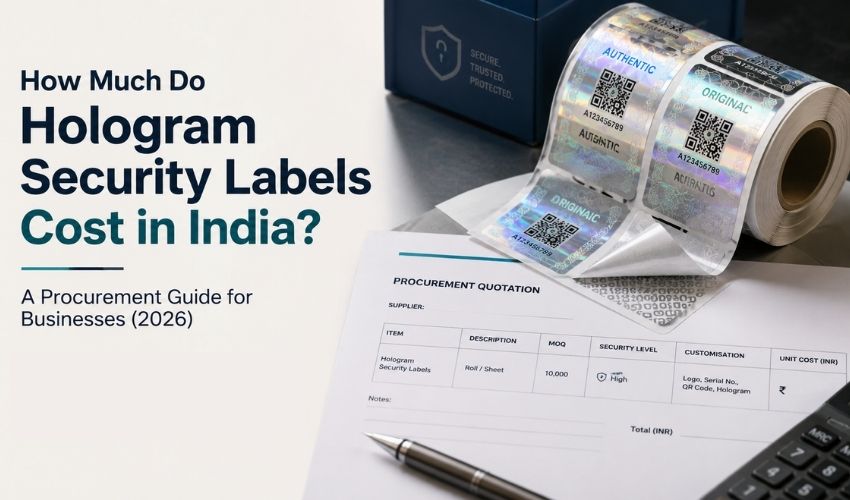
How Much Do Hologram Security Labels Cost in India? A Procurement Guide for Businesses (2026)
Aug 21, 2026
Garment Tags in India: How Brands Use Custom Tags to Increase Perceived Value & Sales
Jul 27, 2026
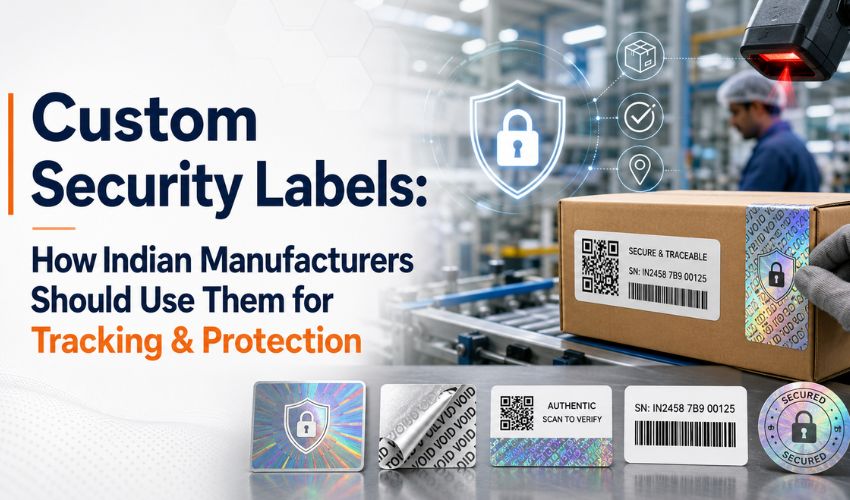
Custom Security Labels: How Indian Manufacturers Should Use Them for Tracking & Protection
Jul 16, 2026
Top Benefits of Shrink Sleeve Labels for Product Packaging
Jun 29, 2026
Security Labels for Automotive Parts Manufacturers
Jun 23, 2026

The Evolution of Holographic Technology: From Visual Authentication to Advanced Optical Security
Jun 10, 2026
Smart Labelling Solutions For Food & Beverage Packaging
May 25, 2026
How Secure Packaging Helps E-Commerce Brands Reduce Fraud?
May 21, 2026

How Security Holograms Prevent Counterfeit Pharmaceuticals in India
Jul 16, 2025
Top 5 Custom Hologram Applications for FMCG Packaging
Jul 24, 2025
How Security Holograms Shield FMCG Packaging from the Rising Counterfeit Menace
Aug 16, 2025
Why Self-Adhesive Labels Are the Smarter Choice for Modern Packaging
Aug 21, 2025
Revolutionizing Brand Protection: Holographic Security Packaging with Integrated Phygital Solutions
Oct 23, 2025
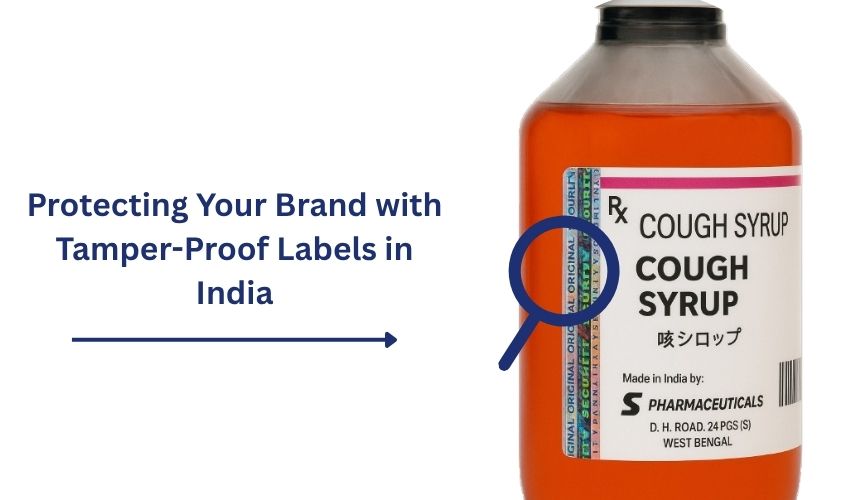
Protecting Your Brand with Tamper-Evident Labels in India
Oct 30, 2025
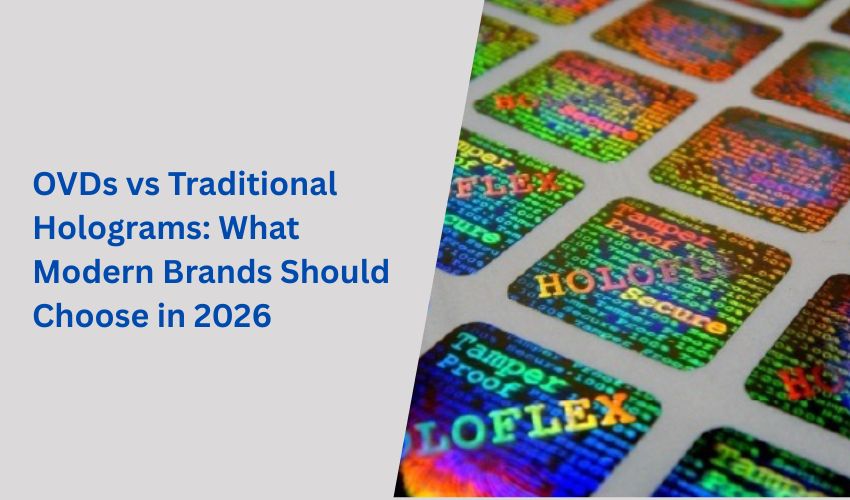
OVDs vs Traditional Holograms: What Modern Brands Should Choose in 2026
Dec 19, 2025
Eco-Friendly Label Materials: How Brands Can Reduce Packaging Waste Without Losing Security
Jan 06, 2026
The Rise of OVD-Led Authentication - Where Design and Advanced Authentication Converge
Feb 12, 2026
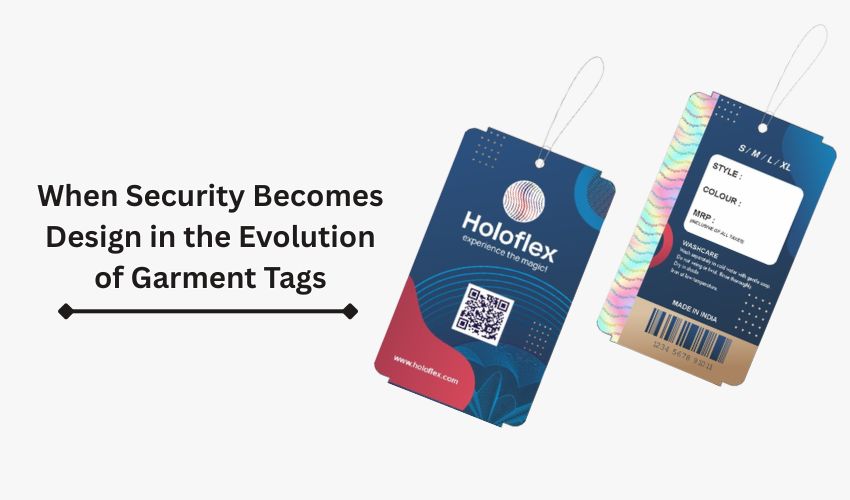
When Security Becomes Design in the Evolution of Garment Tags?
Feb 24, 2026
Holograms & OVDs in Security Labels and Stickers: A Smart Way to Protect Products
Mar 17, 2026
Customised Packaging Labels in India: A Complete Guide for Businesses
Mar 24, 2026
How Advanced OVD Technology is Transforming Hologram Security in 2026?
Apr 28, 2026